


The MarshallAI Solution
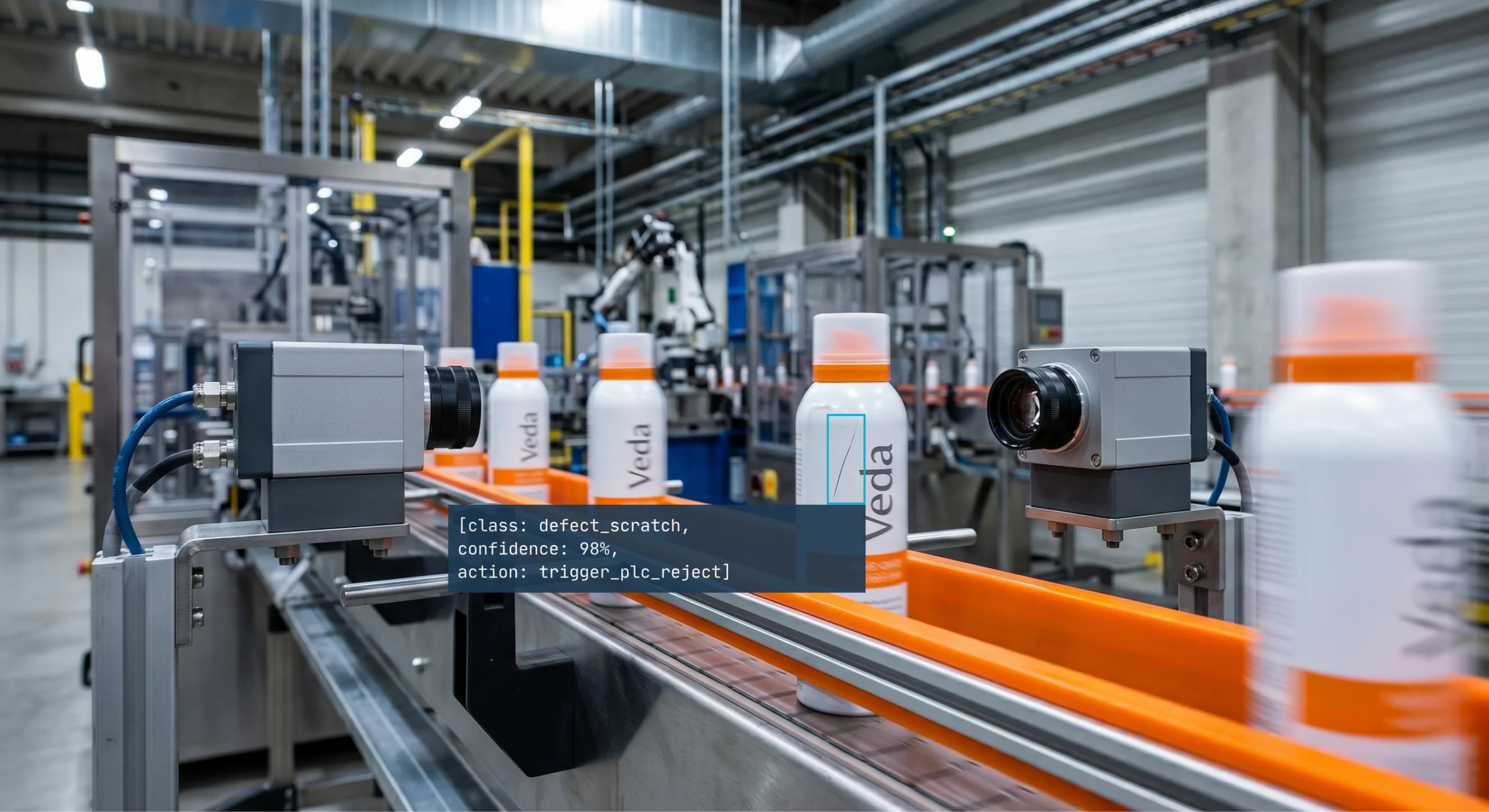
Automated Optical Inspection That Runs at Full Line Speed
Traditional automated optical inspection relies on fixed rule sets and controlled lighting conditions. It works until your product changes, your line speeds up, or a defect type appears that nobody programmed for.
MarshallAI’s AI vision platform trains on your actual production environment — your parts, your lighting, your tolerances — and runs entirely on-premise with no cloud dependency. No retraining cycles waiting on a vendor. No model updates requiring internet connectivity. Just inspection that works at the speed your line demands.
Surface defects
Micro-cracks, scratches, pitting, and blemishes detected at full line speed.
Dimensional verification
Measure critical features, tolerances, and geometry against defined limits without contact gauging or manual sampling.
Label and marking validation
Verify laser etchings, printed batch codes, date stamps, and barcodes. Read OCR text and flag missing, rotated, or illegible marks.
Assembly completeness
Confirm every component is present, correctly oriented, and properly seated. Catch missing O-rings, incorrect inserts, or misaligned parts.
Multi-SKU differentiation
Distinguish near-identical product variants on the same line — different configurations, colour codes, or part numbers — without reprogramming.
Foreign object detection
Identify contaminants, rogue parts, and out-of-spec materials.
Use case examples
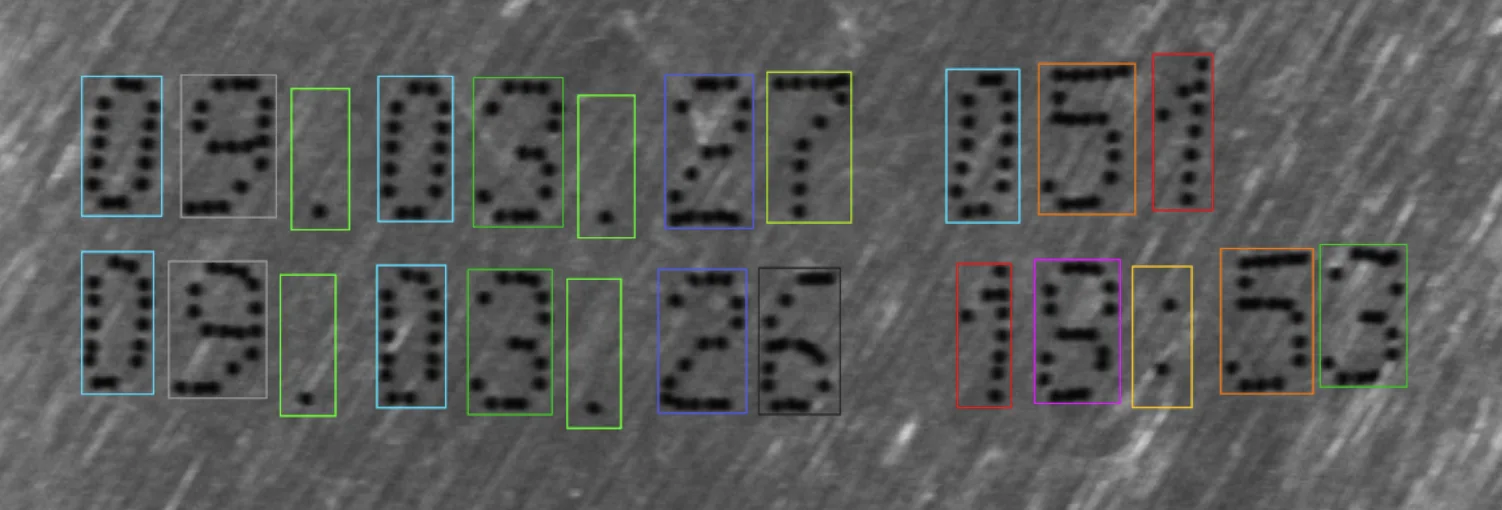
OCR from Hard-to-read Surfaces
Read batch codes, date stamps, serial numbers, and part markings from embossed, laser-etched, dot-peen, inkjet, and debossed surfaces. Excellent performance on low contrast, non-ideal angles and difficult-to-read surface finishes.
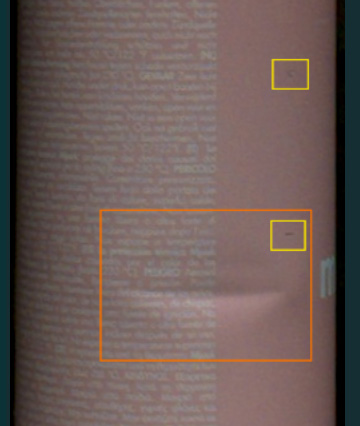
Defect detection
Identify surface defects including micro-cracks, scratches, pitting, dents, burrs, and contamination on any part geometry — from flat sheet metal to complex moulded components.
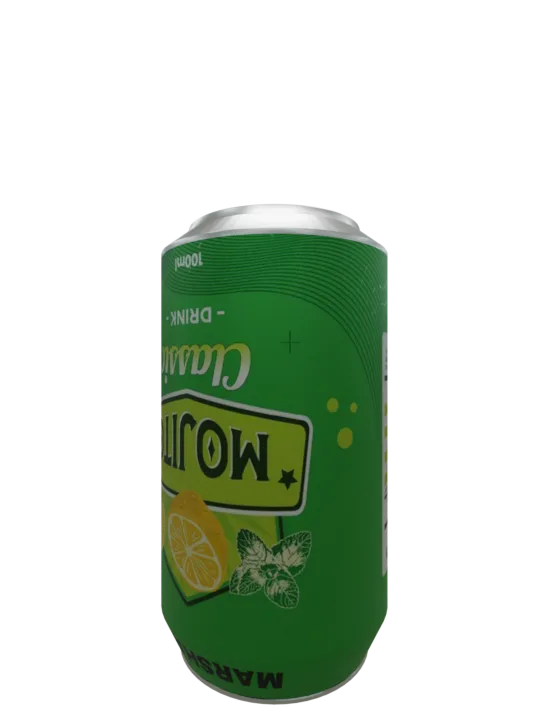
Label verification
Verify that every label is present, correctly positioned, and contains accurate information. Verify and cross-reference barcodes, QR codes, batch numbers, expiry dates, and regulatory markings against expected values .
Answers about Automated Optical Inspection
What is Automated Optical Inspection (AOI)?
Automated optical inspection (AOI) is the use of camera systems and image analysis software to automatically examine products during or after manufacturing.
What can Automated Optical Inspection be used for?
AOI systems check for surface defects, dimensional accuracy, assembly completeness, label correctness, and foreign object contamination. AOI systems can deliver consistent quality control at production line speeds without manual labour or human intervention.
How Automated Optical Inspection works?
An AOI system captures images of each part as it passes through an inspection station. The software analyses each image against a reference model or pre-programmed rules, flags non-conforming parts, and triggers a reject or alert signal in real time.
How are modern AI-based AOI systems different from traditional AOI?
Modern AI-based AOI systems build their reference model by training on images of known good and defective parts from your actual production environment, rather than relying on manually programmed rules.
| Traditional AOI | AI-Powered AOI | |
|---|---|---|
| Setup | Manual rule programming per product | Trains from production images |
| Defect types | Only catches pre-defined defects | Generalises to new defect types |
| Product changeover | Requires reprogramming | Retrain from new sample images |
| Accuracy | Sensitive to lighting and variation | Robust to environmental variation |
| False reject rate | Higher — rigid thresholds | Lower — learned tolerances |
| Deployment time | Weeks to months | Hours to days |
| Infrastructure | Often proprietary hardware | Works with standard IP cameras |
MarshallAI for Automated Visual Inspection
2500+ ppm
Sustained, multi-feature inline inspection speed without buffering delays or frame drops.

99,995% accuracy
Field-proven precision across high-speed production lines. Continuous auto-tuning improves the model accuracy.

Fast deployment
Build, train, and deploy a functional inspection model from scratch using only 5-10 images.

Data Privacy
Your proprietary production data never leaves the factory floor. 100% on-site processing.
Industrial integrations & Direct actuation
MarshallAI connects with ERP, MES and SCADA systems and triggers physical diverters, gates, or PLCs via edge-processing with near-zero latency.
Case studies
-
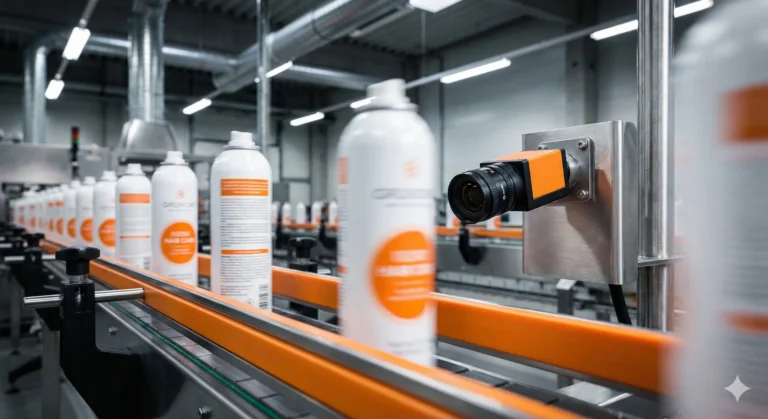 Mastering QA in High-Mix Manufacturing: Rapid Changeovers and >99% Accuracy at Taerosol
Contract manufacturing and frequent product changeovers used to mean a constant struggle with QA bottlenecks. Discover how Taerosol future-proofed their cosmetics line with a rapidly adaptable AI system that catches over 99% of complex label and packaging defects.
Manufacturing Quality assurance
-
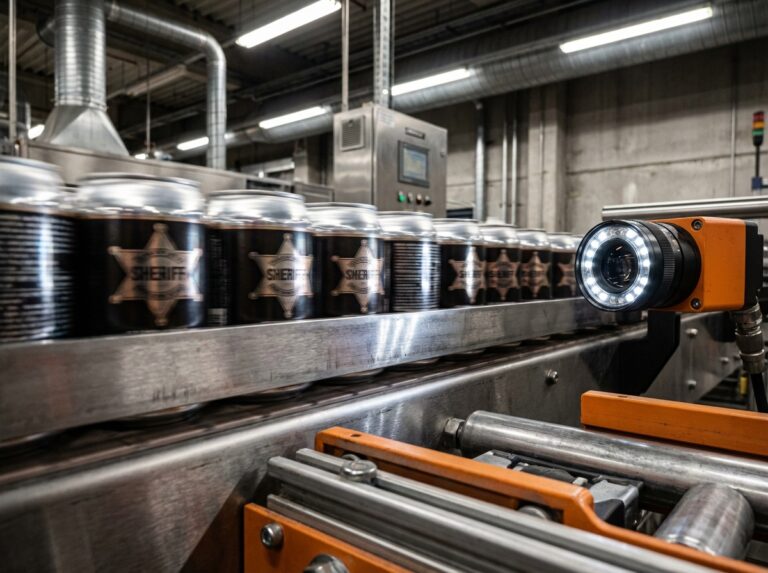 Eliminating Rogue Cans: High-Speed QA in Beverage Manufacturing
A global beverage manufacturer spent 15 years trying to reliably intercept “rogue cans” on their high-speed filling lines. Discover how MarshallAI deployed a zero-latency edge vision system to inspect 2,500 cans per minute, preventing mismatched products and costly mechanical jams with near-perfect precision.
Beverage industry Quality assurance
-
 Sub-Millimeter Quality Control at Scale: Securing Yield for Turvanasta
Legacy vision systems were throwing away perfectly good material. Discover how MarshallAI deployed an edge computing solution to eliminate false rejects and inspect hundreds of millions of sub-millimeter metal parts with absolute precision.
Manufacturing Quality assurance