AI-POWERED INDUSTRIAL INSPECTION
Automated quality control at production speed.
Detect defects, check product markings and remove faulty products automatically.
We design and deliver inspection systems for your products and production line.
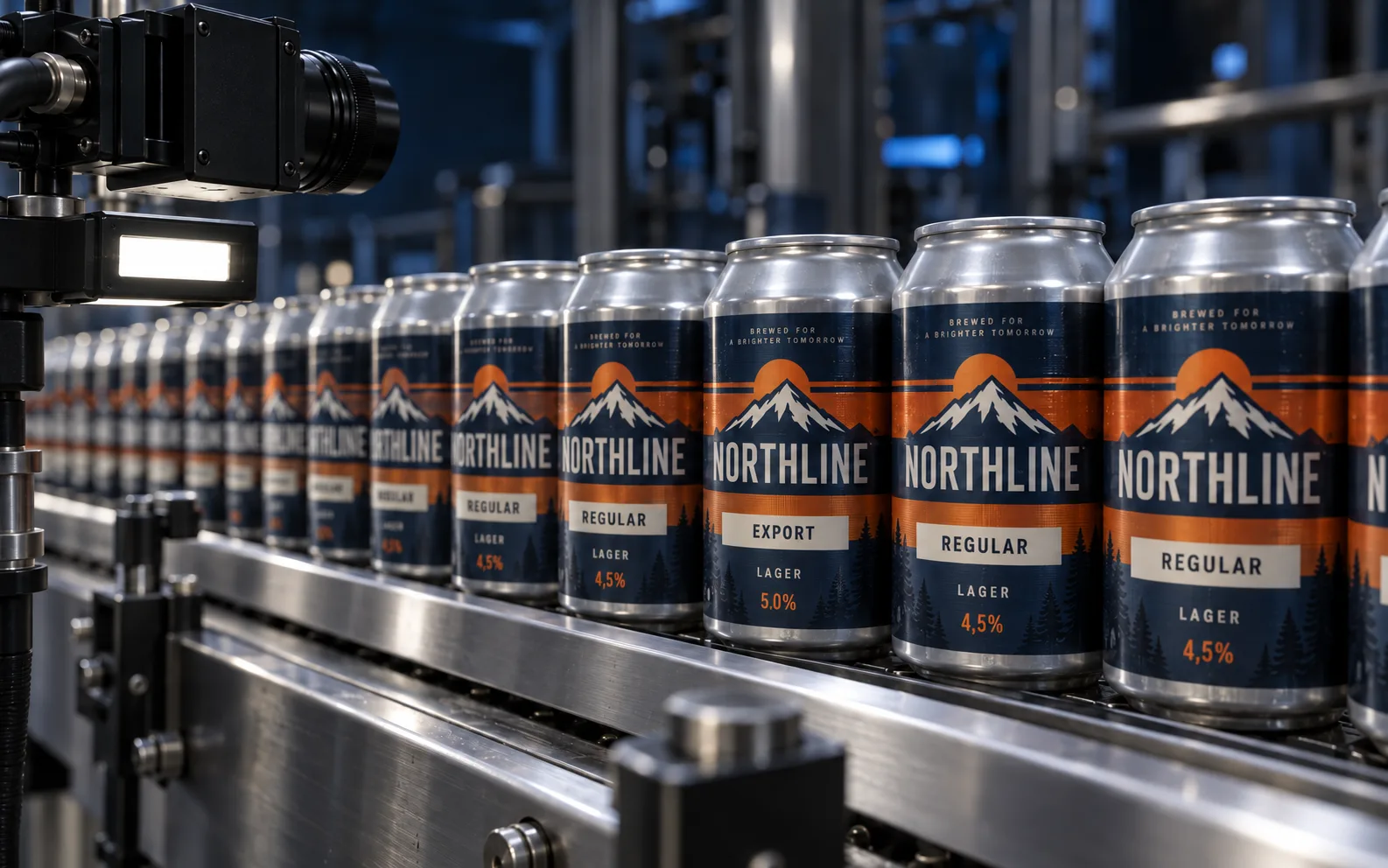
Actual inspection speed is measured in milliseconds. MarshallAI can comfortably inspect over 150,000 units per hour.
Trusted by












What do you need to inspect?
Inspection solutions
From product markings to surface defects, we configure each inspection around the features and faults that matter in your production.
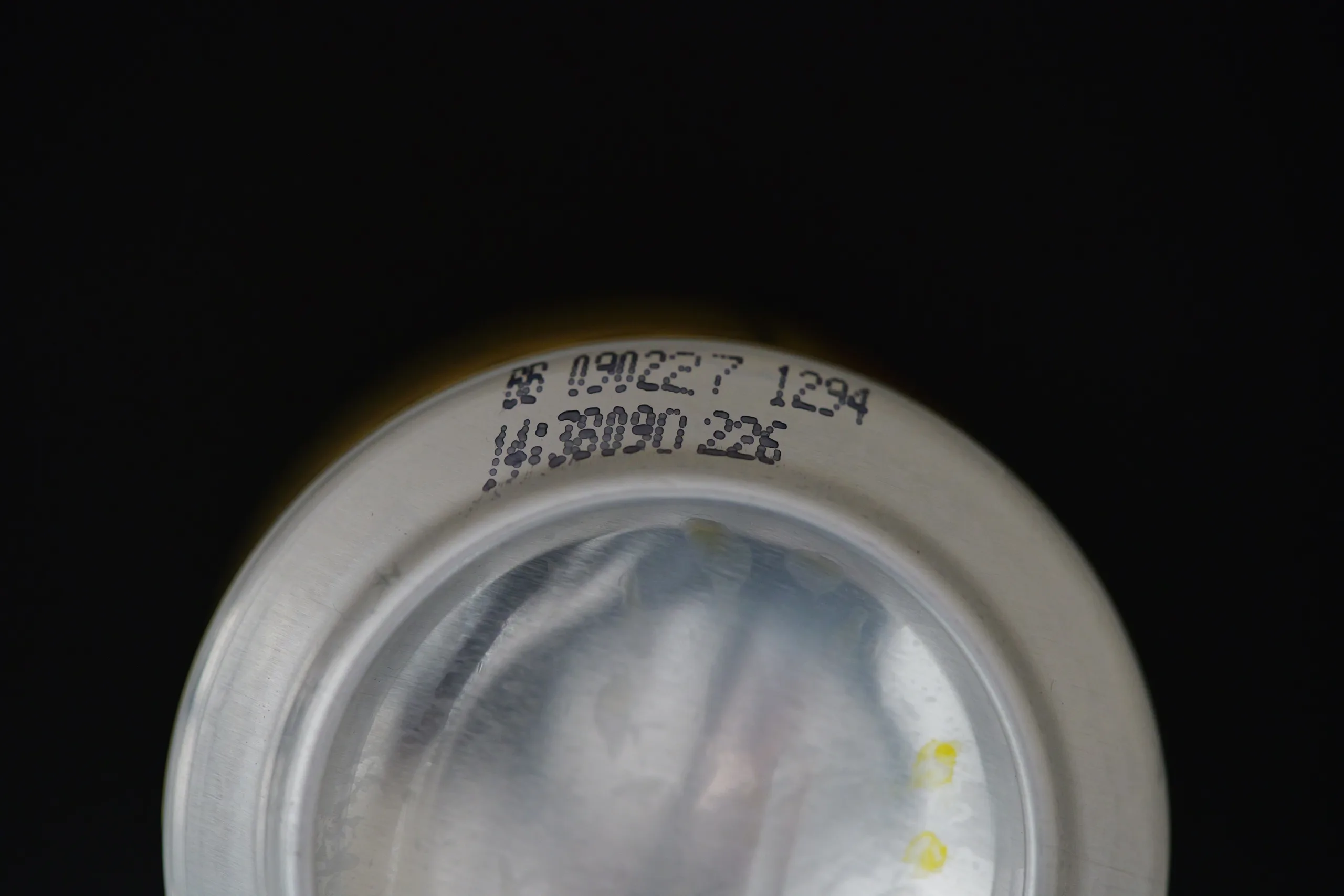 READ & VALIDATE
Date & Lot Code Inspection
Check that markings are readable and contain the correct information.
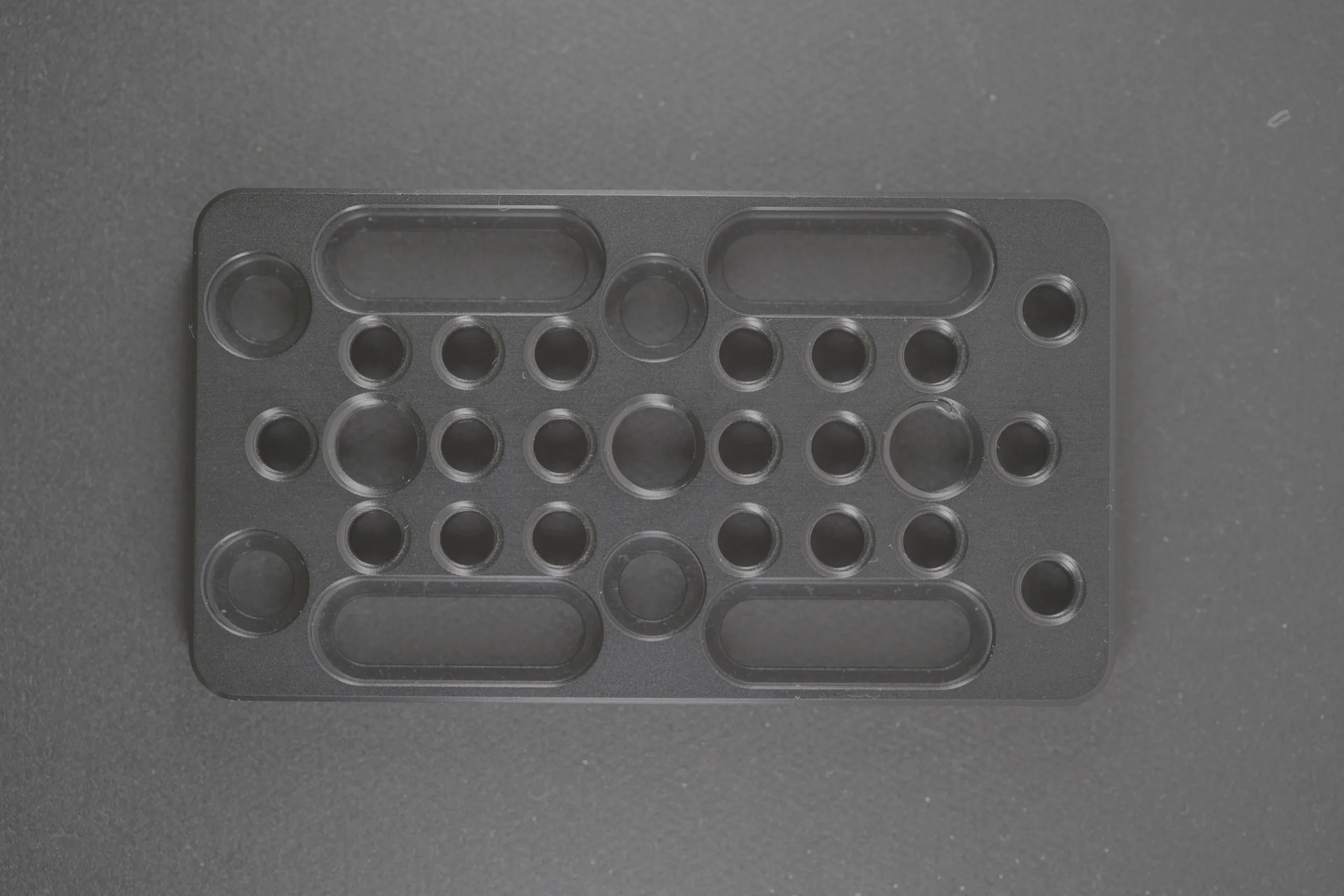 DETECT & CLASSIFY
Surface & component inspection
Detect damage, surface defects and incorrectly assembled parts.
Explore all
our solutions.
See examples of the inspection tasks we can automate.
Flexible implementation options
Our products
Order a complete inspection system, use your existing cameras or develop your own applications with AFSA software.
Turnkey inspection systems
Turnkey solution for your production line.
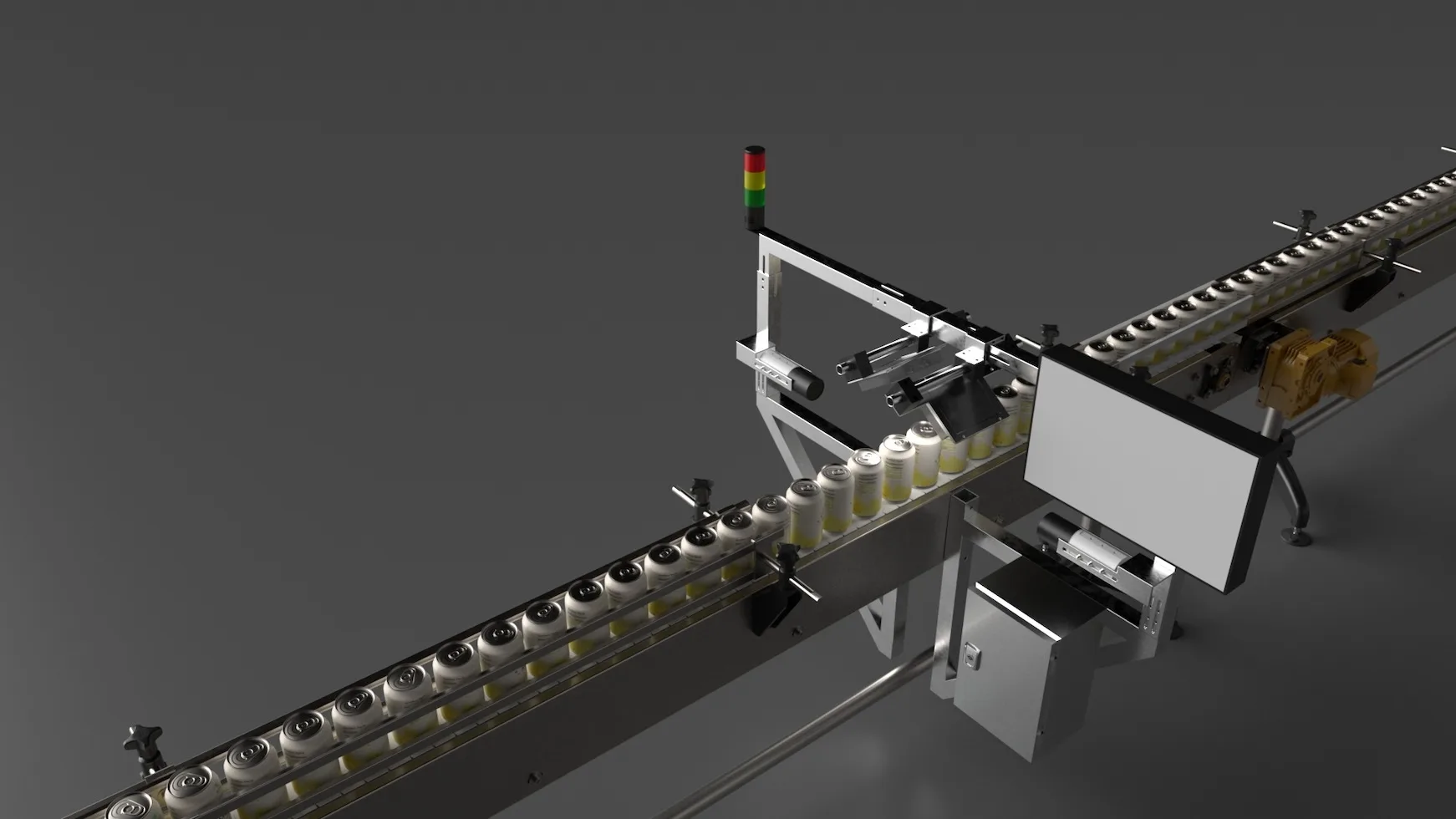
We take care of system design, equipment, software and commissioning. The delivery includes integration with your production line and operator training.
- Cameras, lighting & processing
- AFSA software & trained models
- Installation & system integration
- Operator training & support
Retrofit
Add intelligence into existing cameras.
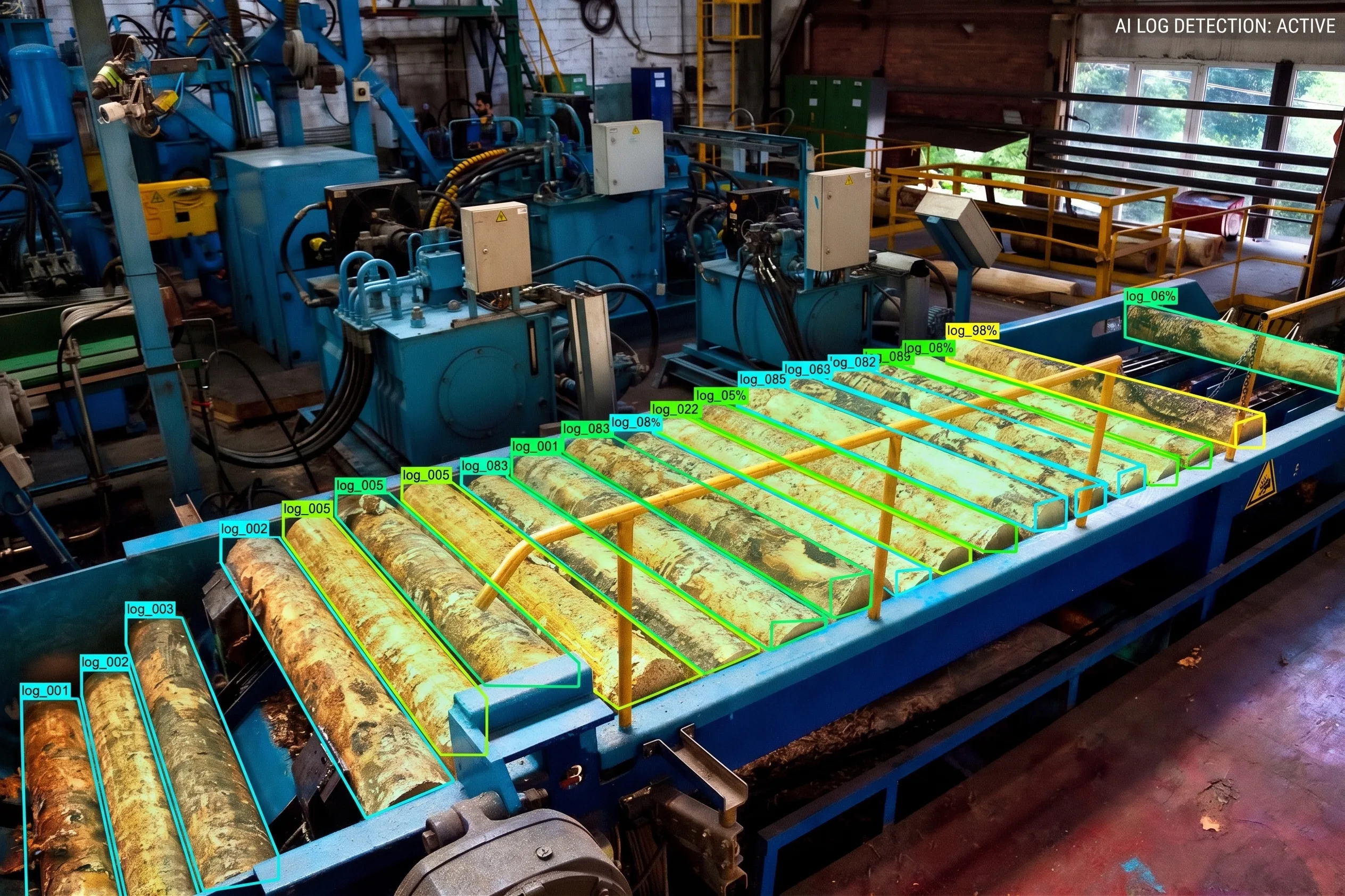
Use suitable existing cameras for automated inspection and process monitoring. We assess image quality, develop the analysis and connect the results to your systems.
- Existing camera & video-stream assessment
- Training data collection & model development
- Alerts & automation integration
- Operator training & support
AFSA software license
Your team. Our technology.
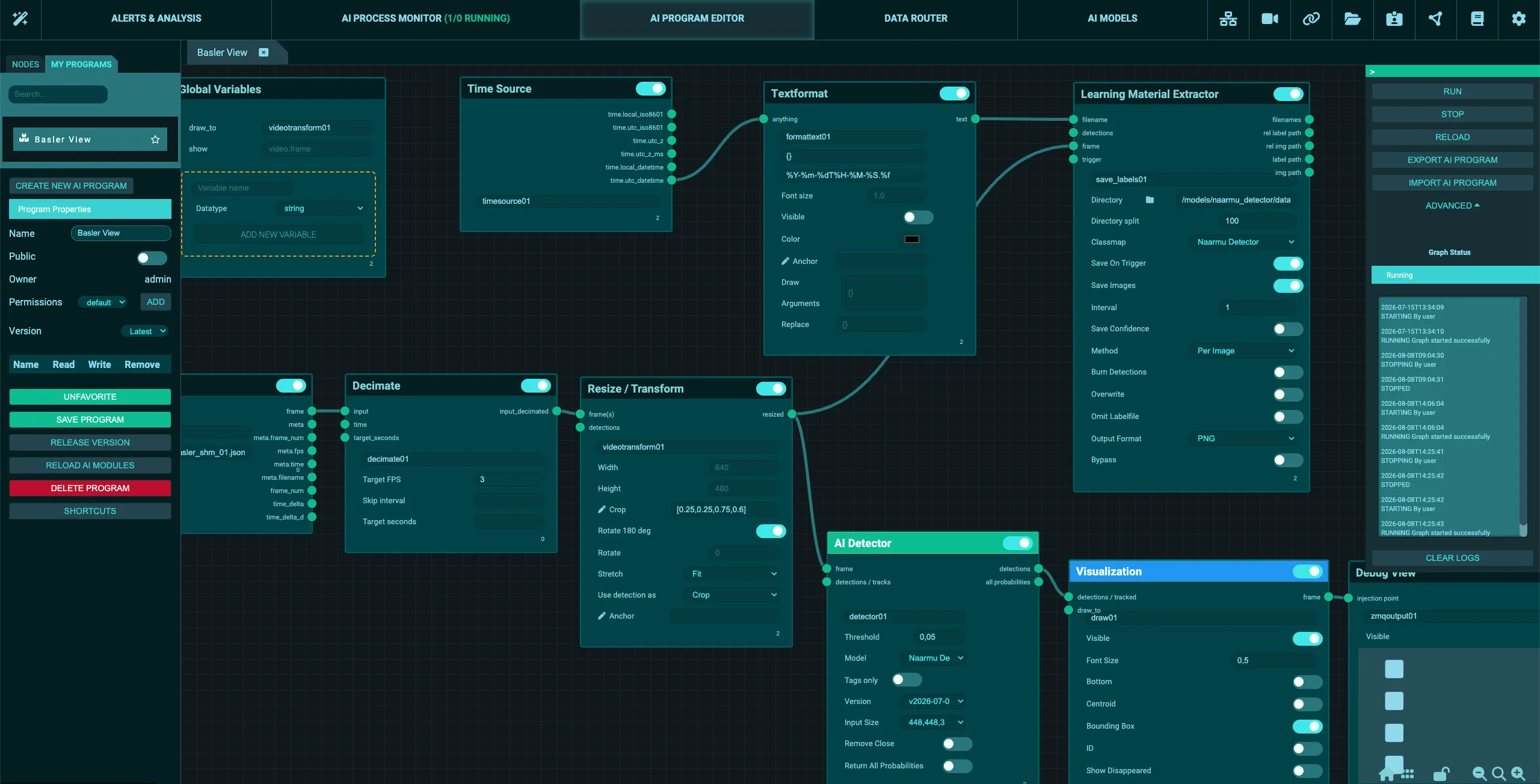
Build and manage inspection and monitoring applications with AFSA. Your team develops the applications, with model training and development services available separately.
- AFSA platform licence
Optional services
- Annotation & model training
- Model evaluation & analytics
- Inspection application development
Provided by MarshallAI on request.
Case study – Cosmetic aerosol inspection
One production line.
Dozens of products.
One inspection station.
MarshallAI deployed an automated inline inspection station and rejection unit. Every SKU gets inspected automatically without any operator input or re-configuration between batches.
+99%
errors caught
Why MarshallAI?
Built for your production requirements
We select the cameras, sensors and develop the AI model for your inspection task and integrate the system into your production. One partner, from the first call to a working system.
Complete delivery from one supplier
From sensors and mounting to AI model training and system integrations. We deliver the whole inspection system.
Inspection at production speed
Detect anomalies, measure objects and grade materials in real time.
The right sensors for the task
Combine cameras (IP, GigE, 3D, line scan, SWIR/NIR) and other sensors (e.g. audio, RF) to detect the features relevant to product quality.
Automatic product recognition
Switch between products/SKUs without manual reconfiguration between changeovers.
Integration with production systems
Integrate with MES, SCADA, ERP and line automation. Trigger rejection, track results and investigate quality issues.
Local data processing
Analyse inspection data securely within your own facility, without relying on cloud processing or third party dependencies.
A clear implementation schedule
We agree the stages and schedule based on the inspection task, available data and integration requirements.
Expand quickly
Start with one inspection station and extend the system as your needs grow.
How we plan your inspection system
Our process
Start by telling us what you need to inspect. We help define the requirements and assess a suitable technical approach.
-
Define the inspection requirements
We review your products, production process and quality issues. Together, we identify what the system needs to detect and what results you want to achieve.
-
Assess technical feasibility
We evaluate suitable cameras, sensors and analysis methods. Where needed, we test the approach using sample products or images.
-
Agree the scope and proposal
We define the performance targets and prepare a proposal covering the delivery, schedule, price and support.
Once the proposal is approved: installation, data gathering, model training, integration, operator training and support.
Featured Industries
What our technology can detect and measure
Common
Questions
MarshallAI is a computer vision and sensor intelligence company that provides turnkey solutions for automated optical inspection, process optimisation and signal analysis. MarshallAI utilises its proprietary AFSA (Agile Focused Signal Analysis), a node-based multimodal AI, platform for real-time sensor intelligence (eg. machine vision). AFSA can be used to build, deploy and manage deep learning pipelines very quickly.
AFSA ingests video, audio, thermal, radio and data streams simultaneously, processes them through configurable neural network pipelines, and outputs structured results to any industrial protocol including OPC UA REST MQTT and MOXA.
No. MarshallAI is a computer vision and sensor intelligence company and AFSA is our deep learning platform. While LLMs excel at processing text, we utilize neural networks optimized for high-speed object and pattern recognition in real-time video streams.
Think of them as siblings: LLMs are the masters of language, while MarshallAI is the master of sight. Our system makes automated decisions in milliseconds, on tasks that are outside the current technical scope of standard language models.
MarshallAI can provide a variety of solutions for different industries. Here are some examples:
- Industrial quality inspection and defect detection on production lines
- Assembly verification
- Label & Packaging verification
- Yield & Throughput monitoring
- Material grading
- Safety/PPE Compliance
- Vehicle and pedestrian tracking and classification
- Predictive maintenance from audio and vibration sensors
- Perimeter security and intruder detection
- Tactical intelligence and surveillance at the edge
We also sell licenses to our AFSA platform and have our own REID4 edge hardware.
This depends on how you work with us:
Turnkey clients. If we deliver the full solution, no computer vision or coding background is needed on your side. We build, train and maintain the pipeline for you. Day-to-day, your team works with the results, dashboards and alerts configured for your systems, and any change to detection logic goes through our team under your support agreement. Operator training on the interface is included as part of onboarding.
Platform license holders. If you’re running AFSA independently, the node-based editor is built for engineers and operators without a machine learning background. Building and modifying pipelines requires no coding: nodes are connected visually and configured through a web UI. For custom model training or integration work, a basic understanding of data collection and labelling helps. Training and onboarding are included as part of every deployment.
Yes. A turnkey deployment includes hardware, software, installation, model training and operator onboarding — delivered as a single contract. Typical scope covers:
- Site survey and sensor placement planning
- Hardware provisioned and pre-configured for your environment
- Pipeline build and initial model training on your data
- Integration with your existing SCADA, MES or output systems
- On-site commissioning and acceptance testing
- Operator training and documentation
- Support and maintenance based on Service Level Agreement (SLA)
Contact us for a scoping call — most industrial deployments are production-ready within 6–8 weeks from project start.
Standard industrial deployments go from scoping call to production in 6–8 weeks. The timeline depends primarily on data collection for model training and the complexity of output integrations.
We can build proof-of-concept pilots in days using images and data from your sensors.
Yes. Our AFSA platform outputs to all major industrial protocols natively. If your system accepts OPC UA, REST, MQTT, ModbusTCP, InfluxDB or basic TCP/UDP, integration is straightforward. MOXA relay and other digital outputs are also supported for direct hardware actuation.
Our solutions are hardware and OS agnostic. We can use ARM and x86 architectures and have deployed on laptops, mini-pcs, standard rack servers and our own REID-4 Edge Device.
We support virtually any industrial camera (GigE, USB3, RTSP) or sensor. If your existing infrastructure meets the necessary specifications for your use case, we can re-use your current hardware to reduce deployment costs and installation time.
REID-4 is our purpose-built edge device, a ruggedised compute unit designed to run our AFSA-platform in demanding environments. It handles 5–15 simultaneous data streams, operates from –40°C to +50°C, is rated IP68, and connects via a single CAT6 cable for both power and data.
You do not need REID-4 to use AFSA. The platform also runs on standard server hardware or cloud infrastructure. REID-4 is the right choice when you need on-premise processing, disconnected operation, or MIL-STD-810H environmental resilience.
No. Our AFSA-platform is designed for fully on-premise, air-gapped deployment. Sensor data, model weights and inference outputs never leave your network unless you explicitly configure an external output destination. There is no mandatory cloud connectivity, telemetry or licensing call-home.
The platform software is deployable in classified environments and we work with customers on compliance documentation for defence and critical infrastructure procurement.
The REID-4 hardware is designed and tested to MIL-STD-810H and AECTP 100-500 environmental standards.
For specific certification requirements, contact our team directly.