Large beverage manufacturers operate high-volume filling lines with massive product portfolios. Producing soft drinks, waters, and licensed international brands requires managing dozens of SKUs — including domestic and export variants of the exact same product. To maintain output, these manufacturers demand a quality inspection system that can keep pace with extreme production speeds without compromise.
“We had been trying to solve this problem for 15 years before you came along.”
— Plant Manager, Global Beverage Manufacturer
The Challenge: Zero Margin for Error at Extreme Speeds
High-speed beverage filling lines leave almost no margin for error. This manufacturer faced four distinct quality control challenges that existing legacy vision solutions simply could not solve:
- The “Rogue Can” Threat: A rogue can occurs when an empty can of one product enters a filling line intended for another (e.g., a soda can filled with beer, or an export variant filled with a domestic formulation). Because many SKUs share near-identical geometry and print designs, no other machine vision system had been able to solve this at line speed. The consequences of a rogue can reaching a consumer range from costly product recalls to severe regulatory violations.
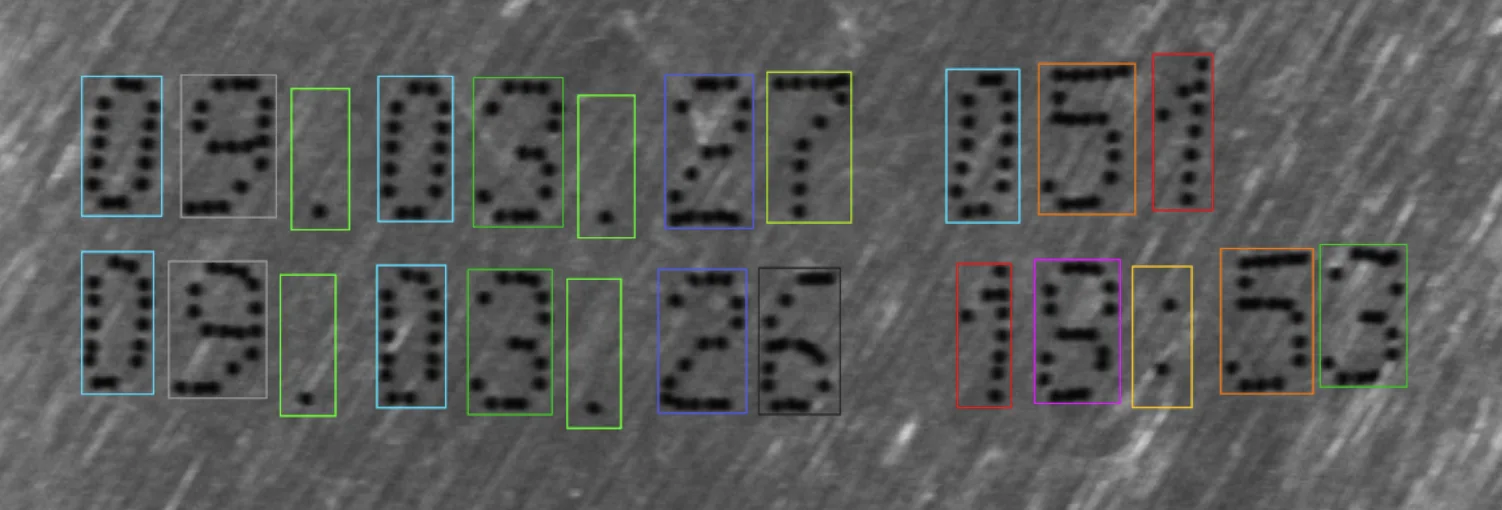
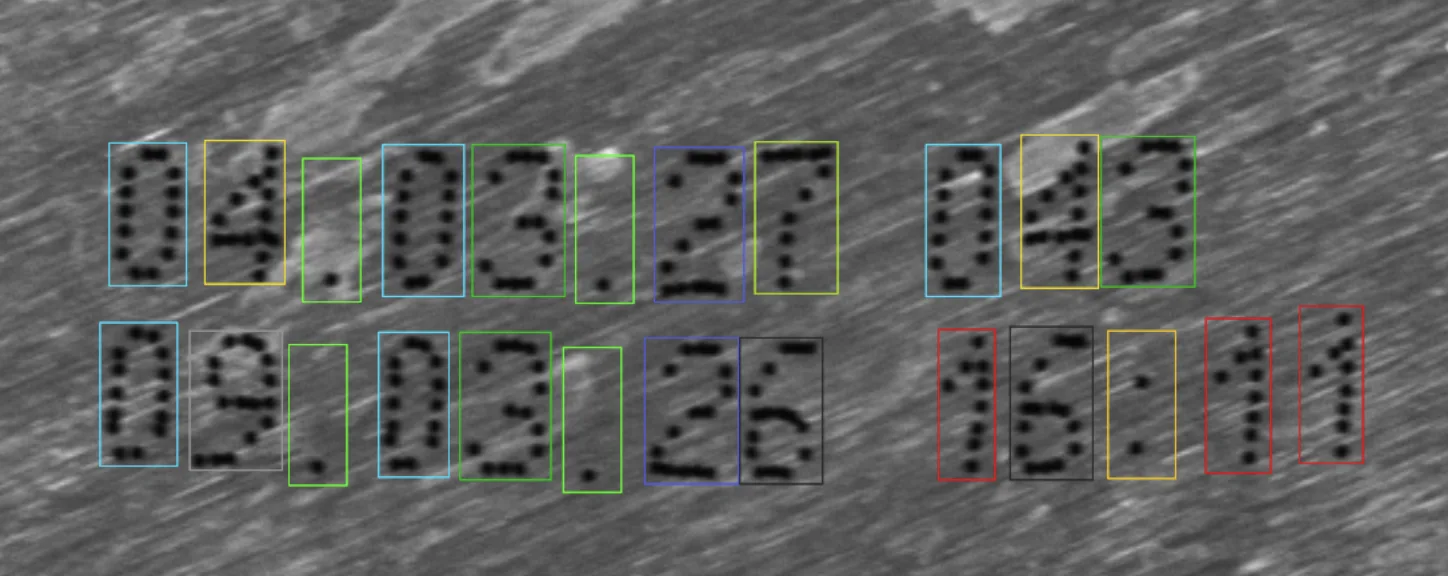
- Date Label Verification: Inkjet-printed date codes on highly reflective, curved aluminium surfaces are notoriously difficult to read. Contrast is low, and print quality naturally fluctuates. In export markets, a false or missing date code can render an entire batch non-compliant.
- Fallen Cans: At 2,500 cans per minute, a single fallen can create jams and systemic errors. During the initial implementation, it was discovered that nearly 90% of date label printing issues were actually caused by cans tipping over upstream. Legacy sensors struggle to reliably detect orientation at these extreme speeds, leading to messy mechanical jams and wasted materials.
- Dent and Scratch Detection: Surface damage degrades product integrity and damages brand reputation. Identifying physical defects on a moving line at maximum production speed requires a level of imaging precision that traditional rule-based systems struggle to maintain.
The Solution: Zero-Latency Edge Processing
At processing speeds of over 2,000 units per minute, cloud computing is not an option. Sending image data to the cloud introduces latency; by the time a cloud-based AI identifies a defect, the can is already tens of meters away from the inspection point.
MarshallAI solved this by deploying a compact, localized edge computing vision system integrated directly into the customer’s existing filling line. Taking up only about one square meter of line space, the system processes visual data instantly on the factory floor.
- Rogue Can Interception: By learning the precise visual signatures of every SKU, including slight differences between domestic and export variants, MarshallAI successfully differentiated near-identical cans, solving a challenge the beverage industry had largely accepted as impossible at scale.
- Date Verification: MarshallAI trained custom vision models specifically for the low-contrast conditions of inkjet on aluminium, achieving reliable Optical Character Recognition (OCR) regardless of lighting or can orientation.
- Fallen Can Detection: Our system instantly recognizes the orientation of every single unit. By identifying fallen cans before they reach the next stage, the AI actively prevents jams, costly downtime and reduces waste.
- Surface Inspection: The system performs continuous 360-degree surface inspection, flagging physical defects that previously required unreliable manual sampling.
The Tangible Results
The deployment proved that advanced deep learning can operate flawlessly in the most demanding, high-throughput manufacturing environments.
- Improved Production Uptime: High-precision defect detection has virtually eliminated false positives. By feeding operators accurate, real-time data on critical failures, the factory avoids unnecessary line stoppages and maximizes daily yield.
- Total Consumer Protection: Rogue cans are intercepted, ensuring that a mismatched product never ends up in the hands of a consumer.
- Unprecedented Speed & Accuracy: The system inspects every single can at 2,000 to 2,500 units per minute. Across all four simultaneous inspection tasks, defect detection accuracy reaches 99,99% accuracy.
- Seamless Operational Flow: The entire SKU range is handled by a single system. There are no line slowdowns or manual recalibrations required during product changeovers.