Solution
Real-time AI-Powered Perimeter & Critical Infrastructure Protection
Traditional perimeter security relies on human monitoring of camera feeds. Operators miss events. Recordings get reviewed after the fact. Response comes too late.
MarshallAI’s AFSA platform monitors every sensor feed simultaneously, detects intrusions and anomalies in real time, and triggers alerts or physical responses automatically. No cloud. No data leaving the site. No dependency on network connectivity.
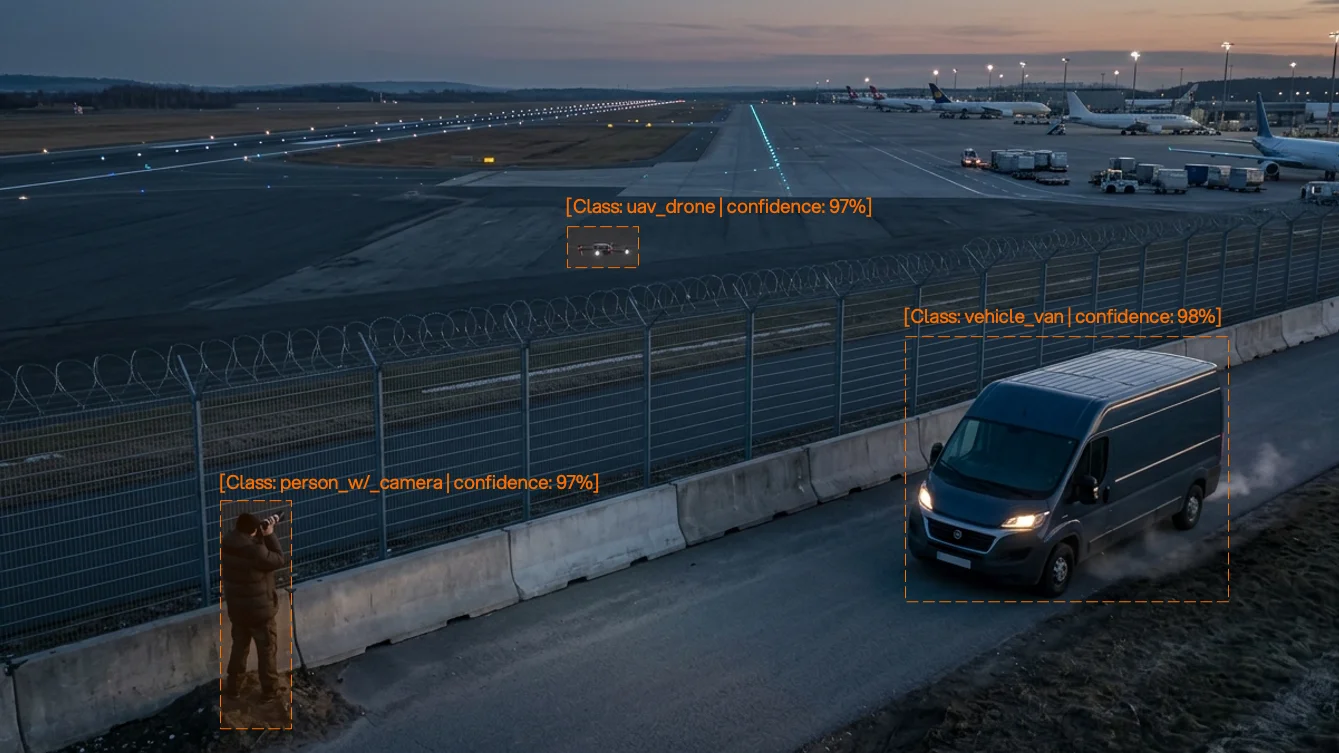



Intrusion detection across fences, gates, and open perimeters
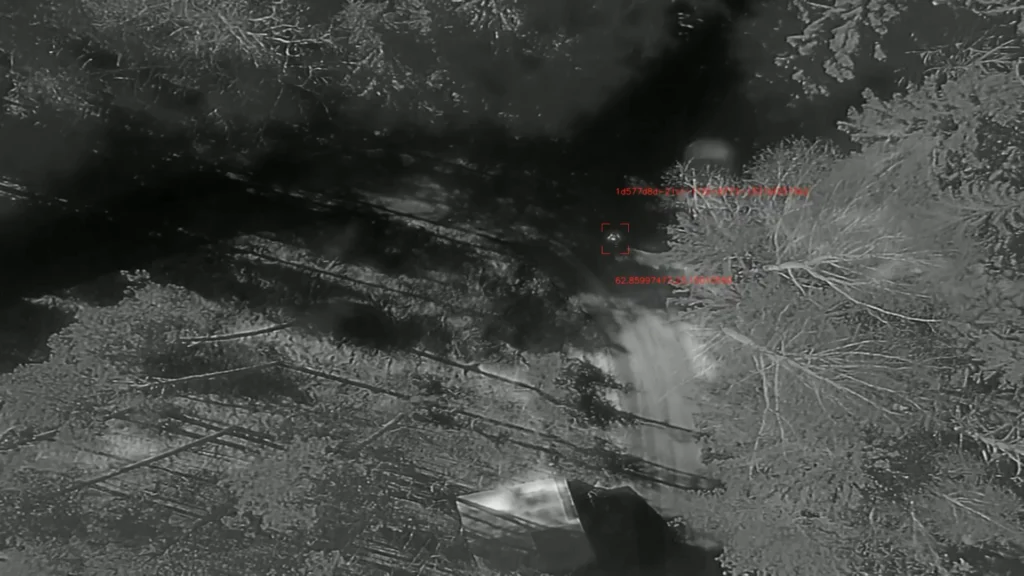
Drone and UAV detection from EO/IR video, acoustic sensors, and RF spectrum
Multi-sensor fusion — combine camera, thermal, acoustic, and radar inputs into a single detection layer
Automated alerts and physical actuations: barriers, lighting, alarms, access control
Works with existing IP cameras and legacy analogue CCTV infrastructure
Fully air-gapped — no cloud dependency, no external data transmission
GDPR-compliant by design — no biometric data, no face recognition unless explicitly configured
Use case examples
After-Hours Perimeter Intrusion Detection
Detect unauthorised access to fenced sites, industrial facilities, ports, and utility infrastructure outside operating hours.
The system can learn normal baseline activity — maintenance vehicles, wildlife, lighting changes — and raises alerts only for genuine deviations. False alarm rates are dramatically lower than motion-triggered systems.
Drone and UAV Detection
Identify and track unmanned aerial vehicles in real time across multiple sensor inputs including EO/IR video, acoustic sensors, and RF spectrum data. Classifies UAV type and position. Our platform can ingest feeds from existing sensor infrastructure.
Critical Infrastructure Surveillance
Continuous monitoring of energy facilities, water infrastructure, transport hubs, and communications assets. Detect vehicle intrusions, forced entry attempts, and loitering near sensitive equipment.
Integrates with physical barrier actuators for automated or human-in-the-loop responses.
Case studies
-
 Upgrading Legacy Infrastructure: Crowd Analytics & Security Without Cloud Dependency
Learn how we utilized Särkänniemi theme park’s existing camera infrastructure to process live video on a closed-loop local area network – enabling security and crowd flow analytics while maintaining privacy.
Security Smart cities
-
 From Scratch to Deployment in 1 Hour and 40 Minutes: Winning the xTech Global AI Challenge
See how our platform won the U.S. Department of Defense sponsored xTech Challenge by building a custom, fully offline object-detection model in just 1 hour and 40 minutes using only 77 reference images.
Defence Edge AI
-
 Zero-Friction Borders: Automating Freight Traffic with Finnish Customs
MarshallAI partnered with Finnish Customs to pioneer the future of automated border control. Learn how our edge vision technology instantly clears heavy freight traffic for transit, creating a zero-friction border experience.
Logistics & Supply Chain Security
Answers about Perimeter & Critical Infrastructure Protection
What is AI-based perimeter protection?
AI-based perimeter protection uses camera and sensor systems combined with trained detection models to automatically monitor a defined area for unauthorised access, suspicious behaviour, or security events. Unlike motion-triggered CCTV systems, AI-based systems learn what normal activity looks like and only alert on genuine anomalies — significantly reducing false alarms while improving detection reliability.
What types of threats can the system detect?
The system detects a broad range of security events including perimeter intrusions on foot or by vehicle, unauthorised access through gates or fences, drone and UAV incursions, loitering near sensitive assets, and anomalous vehicle behaviour. Detection can be configured for specific threat profiles based on the site and operational context.
Does the system require new cameras or sensors?
No. MarshallAI integrates with existing IP cameras, legacy analog CCTV, thermal imaging cameras, and acoustic sensors already installed at your site. For sites requiring expanded coverage, MarshallAI provides a complete turnkey hardware package including cameras, lighting, sensors, cabling, processing hardware, and installation.
How does drone detection work without dedicated counter-drone hardware?
MarshallAI’s AFSA platform processes feeds from multiple sensor types simultaneously — EO/IR cameras, acoustic microphones, and RF spectrum receivers — and fuses them into a single detection layer. UAVs type classification and location data is possible. No dedicated counter-drone antenna array or proprietary hardware is required.
Is the system GDPR compliant?
Yes. All processing happens on-site on MarshallAI hardware. No video or sensor data has to be transmitted to external servers or cloud platforms. The system operates on anonymised detection events rather than storing raw footage in external systems. Biometric analysis is not enabled by default.
Can the system trigger automated physical responses?
Yes. MarshallAI connects directly to access control systems, barrier controllers, alarm panels, and lighting rigs via standard industrial protocols. When a detection event occurs, the system can trigger physical responses automatically — locking gates, activating lighting, sounding alarms — with or without human-in-the-loop intervention.
What environments is MarshallAI designed for?
The system is designed for continuous outdoor deployment in demanding conditions. The REID-4 Edge Device is rated IP68 and MIL-STD-810H, operates from -40°C to +50°C, and includes redundant power management. It maintains detection performance in darkness, rain, fog, and snow using thermal and multi-sensor inputs.