Home / Solutions / Label inspection
Label Inspection
MarshallAI verifies label presence, position, print quality, and color on every unit at full line speed. Produt/SKU changeovers recognized automatically, with no retraining between brands or batches.
No Retraining Between Brands
A new SKU starts running and inspection starts with it. No reference images to re-teach, no reconfiguration window.
Catches Subtle Print Defects
Smudges, color shifts, missing design elements, and skewed or misaligned labels.
99.99995% Detection Accuracy
Held at full line speed.
2500+ Cans a Minute
Every single can inspected. Performance can be scaled with processing hardware.
Minimize recalls and complaints
Ensure compliance in every market
Avoid Hold-For-Inspect(HFI)

What Can Go Wrong With a Label
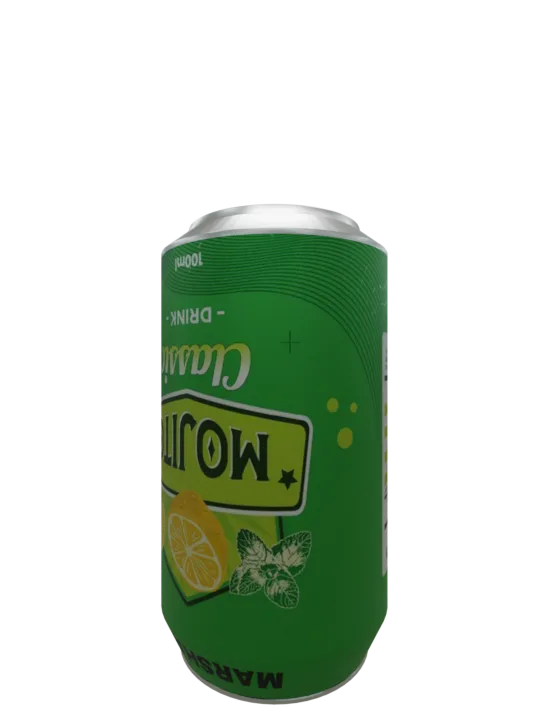
A label failure can occur due to several reasons:
- Presence and placement. A missing label, or one applied askew, upside down, or in the wrong position, reaches the point of sale looking unfinished or wrong.
- Print quality. Smudged ink, low-contrast printing, creases, tears, and missing design elements degrade both readability and shelf appeal.
- Color and brand accuracy. A label printed with the wrong color, or a print run that drifts from the approved reference over time, breaks brand consistency at the exact moment a customer is deciding to buy.
- Content accuracy. Best-before dates, batch codes, and barcodes that are unreadable, incorrect, or missing create compliance and traceability problems long after the product has left the plant.
Any one of these can become a hold-for-inspection situation or worse yet; a regulatory or recall issue.
How MarshallAI Verifies Labels
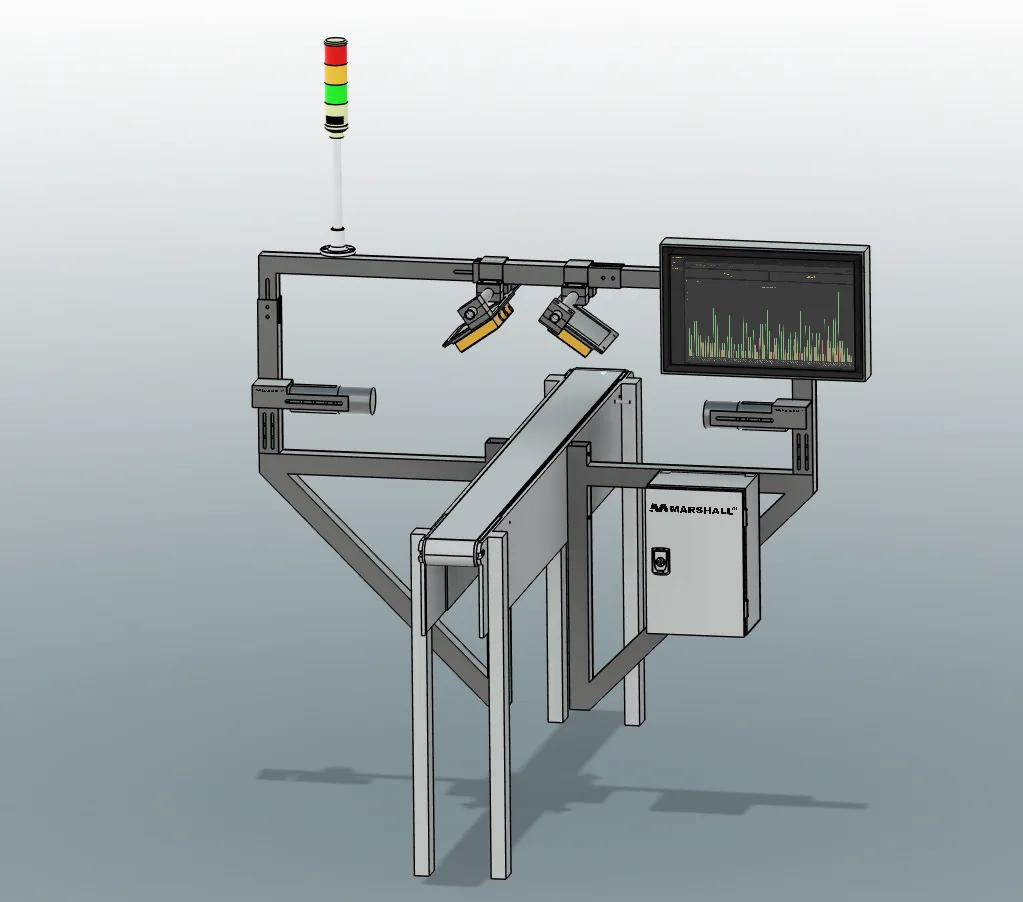
MarshallAI checks a label the way a person would — for what’s actually wrong with it, not just how far its pixels drift from a stored reference — using our advanced AFSA platform.
- No retraining on brand or packaging changes. Every SKU your line runs is already known to the model. When a changeover happens, inspection continues without a retraining step or a new set of reference images to capture.
- Tunable tolerance. The system can distinguish a meaningful defect from a passable cosmetic variation.
- Print, color, and content in one pass. Label presence and position, print quality, color verification, and OCR of best-before dates, batch codes, 1D barcodes, and 2D codes (DataMatrix, QR) all run as part of the same inspection sequence.
- Millisecond latency edge processing. Inspection runs entirely on-site, next to the line, keeping pace with full production speed.
Case studies
-
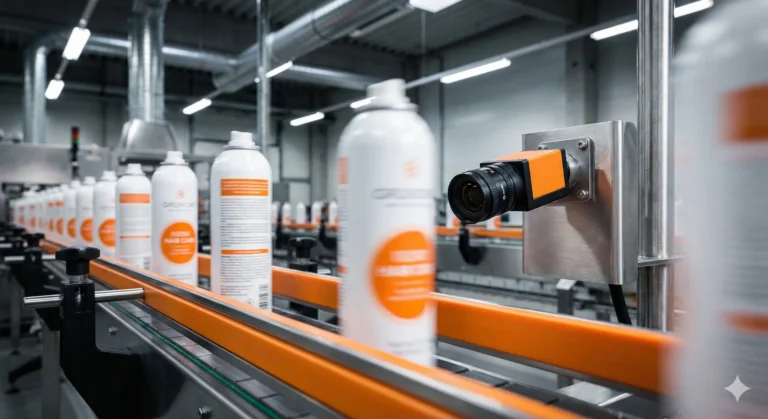 Mastering QA in High-Mix Manufacturing: Rapid Changeovers and >99% Accuracy at Taerosol
Contract manufacturing and frequent product changeovers used to mean a constant struggle with QA bottlenecks. Discover how Taerosol future-proofed their cosmetics line with a rapidly adaptable AI system that catches over 99% of complex label and packaging defects.
Cosmetic manufacturing Quality assurance
-
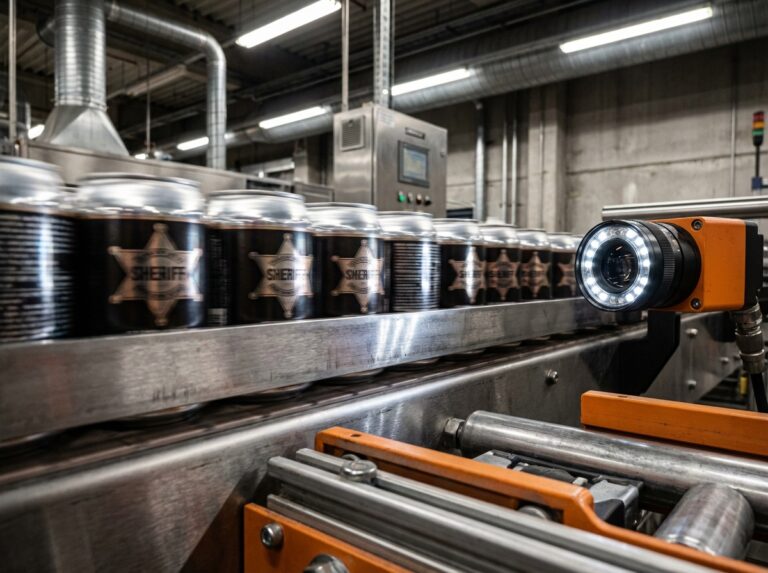 Eliminating Rogue Cans: High-Speed QA in Beverage Manufacturing
A global beverage manufacturer spent 15 years trying to reliably intercept “rogue cans” on their high-speed filling lines. Discover how MarshallAI deployed a minimal latency edge vision system to inspect 2,500 cans per minute, preventing mismatched products and costly mechanical jams with near-perfect precision.
Beverage industry Quality assurance
Questions & Answers
Does MarshallAI need to be retrained when we introduce a new label or packaging design?
No. Every SKU is already modeled in advance, so a new design is recognized and inspected from the first unit — there’s no retraining step or downtime while the system learns it.
What happens when a faulty label is detected?
We can issue an alert, halt the line or integrate with a rejection mechanism. Timelined statistics are also provided for total products and faulty products for OEE optimisation and root cause analysis.
Can it tell two labels apart that only differ by one small detail?
Yes. The system verifies a label’s full identity and print quality rather than comparing against a single similarity threshold, so it catches differences that a coarser pattern-match would treat as acceptable.
Does it read barcodes and 2D codes on labels?
Yes, 1D barcodes and 2D codes such as DataMatrix and QR are read and verified in the same pass as the rest of the label.
Does inspection data leave our facility?
No. Processing runs entirely on-site. Label images and production data stay on your network.